
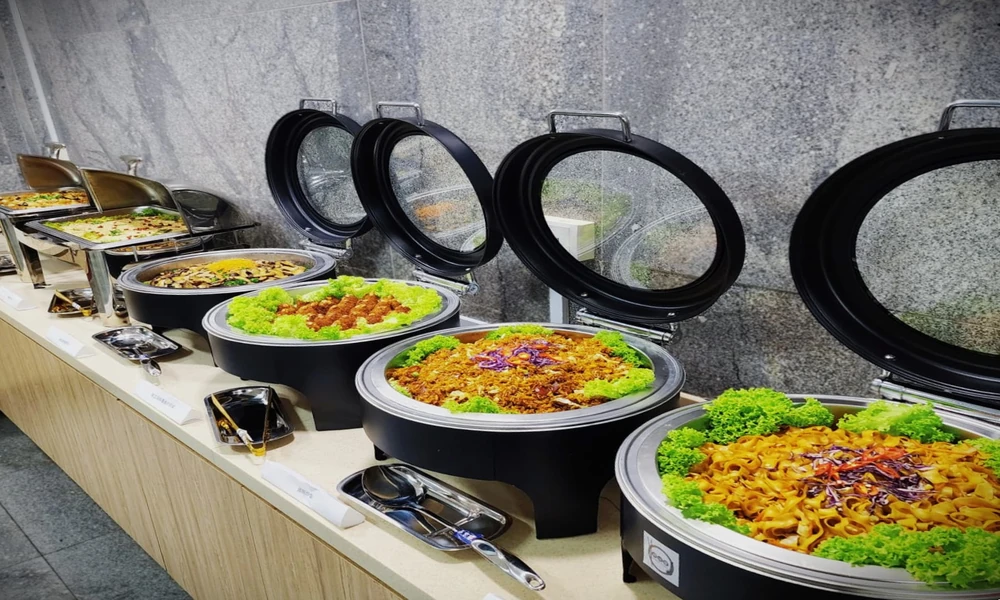
The old approach to plant-based guests was a separate tray of something apologetic sitting at the end of the buffet. That is no longer good enough, and it was never particularly good. Planning vegan catering Singapore guests will genuinely enjoy means building the menu around dishes that happen to be plant-based rather than removing components from dishes that were not, which turns out to be easier here than almost anywhere.
Local Food Already Does the Work
Singapore has an established vegetarian tradition through Buddhist, Hindu and Chinese cooking, which means the reference points already exist. Achar, rojak without the prawn paste base, vegetable curries, tofu preparations, dhal, thosai, popiah, nasi lemak variants built on coconut and sambal, and stir-fried greens with garlic are all familiar to guests and complete in their own right. A menu drawing on these reads as food rather than as accommodation, and mixed groups eat from it without noticing anything has been excluded.
Vegan, Vegetarian and Everything Between
The terms are not interchangeable and confusing them causes real problems on the day. Vegetarian excludes meat and fish. Vegan excludes all animal products including dairy, eggs and honey. Buddhist vegetarian additionally excludes the five pungent vegetables, garlic, onion, chives, leek and shallot which rules out a great many dishes that would otherwise qualify. Jain requirements go further still, excluding root vegetables. Establish exactly which applies before briefing a caterer, because a vegan menu can easily fail a Buddhist vegetarian guest.
The Ingredients That Catch People Out
Fish sauce and belacan appear throughout regional cooking and are frequently overlooked, including in dishes assumed to be vegetable-based. Oyster sauce is standard in stir-fried greens. Chicken stock underpins many soups and sauces. Ghee is used in some Indian preparations. Gelatine appears in desserts, and honey in dressings. Any caterer who has done this work seriously will bring these up before you ask, and one who does not raise them is likely to serve you at least one of them.
Protein Is the Part Most Menus Get Wrong
A spread of vegetables and rice leaves guests hungry an hour later, and that is the most common complaint about plant-based catering. Build protein in deliberately, tofu and tempeh in preparations robust enough to hold their own, chickpeas and lentils in curries and salads, beans, edamame, nuts and seeds. Two or three substantial protein-forward dishes change the character of a buffet entirely. This single adjustment does more for guest satisfaction than any amount of presentation.
Serving Format Matters as Much as the Menu
Buffets encourage grazing across the whole spread and work well for mixed dietary groups, though labelling and utensil discipline become essential. Bento sets guarantee each guest receives a complete meal and remove any risk of a dish running out before someone reaches it, which suits corporate settings and anything with a fixed schedule. Canapé service suits standing receptions but needs a higher item count to be filling. Match the format to how people will actually move around the room.
Label Everything Clearly
Guests should not have to interrogate a server to find out what they can eat. Clear labels on every dish stating vegan, vegetarian, contains dairy, contains nuts and contains gluten resolve this instantly and prevent the awkward hovering that otherwise happens at the start of service. Separate serving utensils for each dish prevent cross-contact between plant-based and other items, which matters both practically and to guests who care about it for religious or ethical reasons rather than allergy.
Working With Other Requirements
Most events carry more than one dietary consideration at once. Plant-based dishes are inherently compatible with a great many restrictions, which makes them useful common ground, though certification and preparation still need confirming separately. Where a guest list includes Muslim attendees, coordinating with best halal catering singapore providers ensures the whole spread works together rather than producing two menus that guests have to navigate around each other.
Allergies Are a Separate Problem
Plant-based and allergy-safe are not the same thing, and conflating them causes genuine risk. Nut allergies are common and peanuts appear throughout regional cooking in satay sauce, in rojak dressing, in kueh and scattered over salads. Sesame, soy and wheat all feature heavily in plant-based menus. Collect allergy information separately from dietary preference on the invitation, pass it to the caterer as a distinct list, and confirm how they prevent cross-contact in preparation rather than only on the buffet line. A guest avoiding animal products for ethical reasons is inconvenienced by a mistake. A guest with a nut allergy is not.
Quantities for Mixed Groups
The most common ordering error is briefing on the number of plant-based guests rather than on total headcount. Good vegetable dishes get eaten by everyone, and a menu portioned for twelve vegan attendees at a hundred-person event will be gone within fifteen minutes. Assume the plant-based items will be consumed across the whole room and order accordingly. It costs a little more and it prevents the single most visible catering failure there is, which is a guest arriving at an empty tray that was specifically provided for them.
Briefing the Caterer
Give numbers, the specific dietary definitions in play, any allergies, the venue kitchen facilities, service timing and the format you want. Ask for a tasting on anything above a certain scale. Ask how they handle labelling and utensil separation, and how they portion so that popular dishes do not run out in the first ten minutes. Experienced vegan catering Singapore providers will ask most of this before you volunteer it, which is the clearest signal you are dealing with one.

Comments are closed.